

How Acoustic Cameras Are Changing Industrial Drone Inspections
There's a moment every experienced field technician knows well. You're standing beneath a high-voltage pylon or walking the length of a pipeline, and everything looks fine. The thermal camera shows nothing alarming. The visual feed is clean. But something in your gut says otherwise.
That instinct, it turns out, has a scientific basis and now, there's technology that can back it up.
When we first started thinking seriously about the limitations of drone-based inspections, the problem kept coming back to the same uncomfortable truth: our eyes, and even our best thermal sensors, only tell part of the story. Some of the most catastrophic and costly industrial failures don't begin with heat or visible damage. They begin with sound- specifically, sound that human ears were never built to detect. The Problem with "Looking" at Infrastructure
For years, UAV inspections meant high-resolution photography. Fly a route, capture the images, review for cracks, corrosion, or physical anomalies. It was a genuine step forward from sending engineers up towers or along dangerous pipeline routes on foot.
Then thermal cameras arrived, and again, the industry leveled up. Suddenly we could see heat signatures, identify overloaded components, and catch problems that were completely invisible to the naked eye. But here's the thing nobody talks about enough: thermal cameras need a problem to already be developing before they can find it. By the time an insulator on a transmission pylon is running hot enough to register on a thermal scan, that component is already deep into its failure cycle. You're not catching a problem early; you're documenting one that's nearly finished. We kept thinking there had to be a better way.
When Infrastructure Fails, It Whispers First
High-pressure gas doesn't just suddenly escape a valve. An electrical insulator doesn't simply shatter one afternoon. These failures have a long, quiet prologue, and that prologue is written in ultrasound. When a pressurized system begins to develop even a hairline breach, the escaping gas creates ultrasonic turbulence , a high-frequency signature that's completely inaudible to us but entirely real. Similarly, a degrading insulator begins to experience what engineers call partial discharge or corona effect: tiny arcing events, a high-frequency buzzing at the molecular level, as electrical current starts finding paths it was never supposed to take.
A standard 4K camera sees nothing. A thermal sensor sees nothing. But the fault is already there, already growing, already costing money and eventually, it will cost a lot more than money.
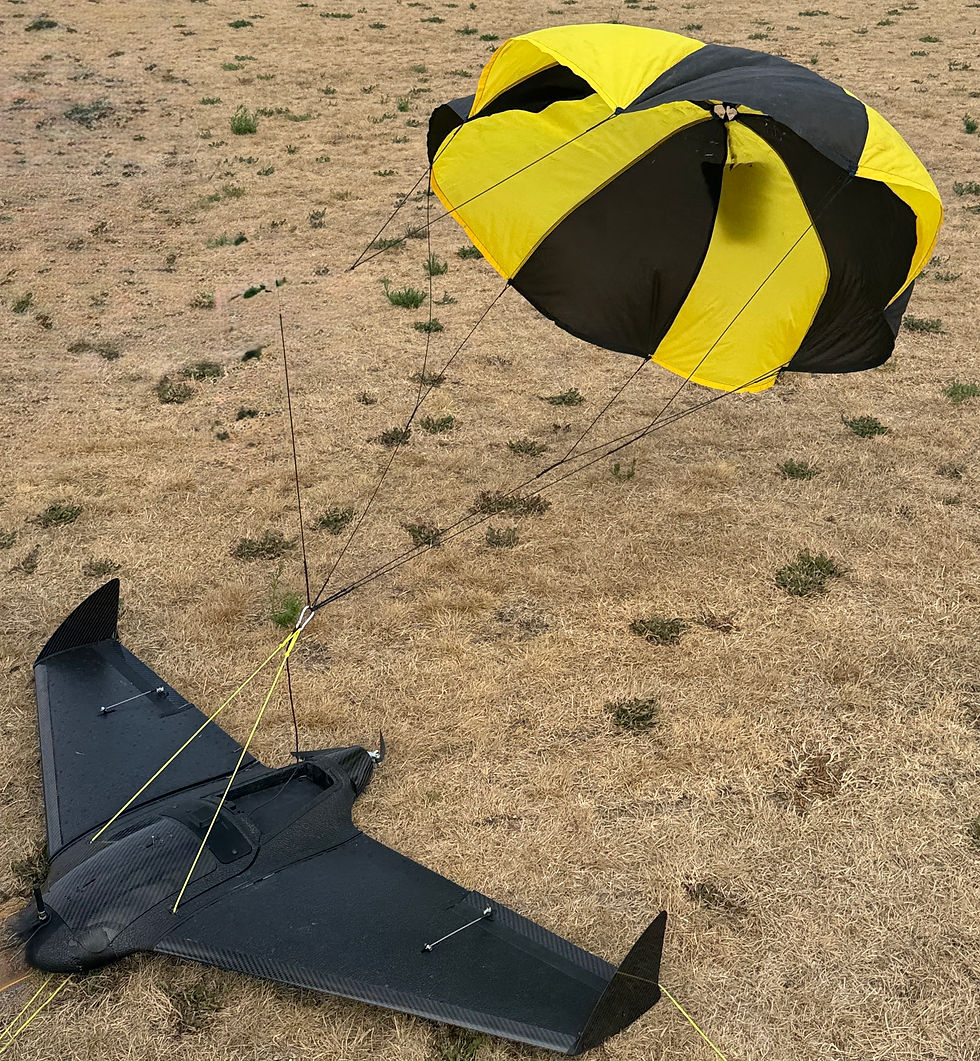
This is precisely why acoustic camera technology became a focus for the DW-10.

Turning Sound Into a Picture
Our acoustic camera works by using an array of microphones, a technique called beamforming, to detect these ultrasonic signatures and then overlay them as a visual heat map onto a live feed. What was once invisible becomes, quite literally, a bright spot on your screen. A valve whispering its slow leak. An insulator quietly announcing its own degradation weeks or months before any other sensor would catch it. The effect, the first time you see it demonstrated, is genuinely striking. A piece of equipment that looks completely normal, reads clean on thermal, and passes a visual check will suddenly light up on the acoustic overlay. That's not a false positive, that's a problem you just caught before it became an emergency. For operations managers who have ever had to explain an unplanned shutdown, or finance directors who've signed off on emergency repair costs that dwarfed what a routine replacement would have been, that moment of early detection has a very specific dollar value attached to it.
Why a DW-10, and Why This One
Handheld acoustic cameras exist, and they work. But deploying a technician with a handheld device across miles of pipeline, or up close to live high-voltage infrastructure, is slow, expensive, and carries real safety risks. The efficiency case for mounting this technology on a drone is straightforward. What isn't straightforward is making it work well. The fundamental challenge with acoustic sensors on drones has always been propeller noise. You're essentially asking a microphone array to listen for faint ultrasonic signals while strapped to a machine generating significant broadband noise. Early attempts at this combination produced results that were, generously, mixed. The work done on the DW-10's flight profile addresses this directly. Our platform's stability and its relatively quiet, single motor operation, give the beamforming array the clean acoustic environment it needs to do its job properly. The onboard processing can filter out the consistent motor signature and focus on the anomalies it's actually looking for. It's the difference between trying to hear a whispered conversation in a stadium versus a quiet room— the technology only works if the platform cooperates.
What This Means in Practice
Consider a compressed air system in a large manufacturing facility. Studies have consistently shown that industrial air leaks can account for 20 to 30 percent of a compressor's total output, energy that is simply purchased, compressed, and then vented silently into the atmosphere. A single pass with an acoustic-equipped drone can map every leak point across a complex facility in a fraction of the time a manual survey would take, and with far greater reliability.
Now scale that thinking to electrical grid infrastructure. Transmission operators manage thousands of kilometers of lines and countless pylons, substations, and switching stations. Identifying partial discharge events early, before they become insulation failures, before they cause faults, before they potentially take sections of a grid offline — has value that is genuinely difficult to overstate. A faulty insulator caught acoustically and replaced during a scheduled maintenance window costs a few hundred dollars. The same insulator failing on a hot August afternoon, cascading into a wider grid event, costs something entirely different.
A Shift in How We Think About Inspection
What excites me most about this technology isn't any single application, it's what it represents philosophically for the inspection industry as a whole.
For most of the history of asset inspection, we have been fundamentally reactive. We look for evidence of problems that are already in progress. Thermal imaging was a step toward earlier detection, but it still requires a process to be generating heat before it becomes visible. Acoustic inspection moves the detection window earlier still, to the point where a fault is announcing itself through physics long before it's announcing itself through consequences.
We're not just flying drones with cameras anymore. We're deploying diagnostic platforms that can listen to infrastructure the way a doctor listens to a heartbeat, catching the arrhythmia before the patient feels any symptoms. The era of purely photographic drone inspection was valuable. What comes next is something more like understanding what we're flying over, not just photographing it.
The DW-10's acoustic inspection capabilities are designed for deployment across power generation, transmission infrastructure, oil and gas, and heavy manufacturing environments. For technical specifications or to discuss operational integration, feel free to reach out directly.


Comments