


Hearing the Unseen
RTK INCLUDED
Handheld Acoustic Cameras Exist
Handheld acoustic cameras exist, and they work. But deploying a technician with a handheld device across miles of pipeline, or up close to live high-voltage infrastructure, is slow, expensive, and carries real safety risks. The efficiency case for mounting this technology on a drone is straightforward. What isn't straightforward is making it work well.
The fundamental challenge with acoustic sensors on drones has always been propeller noise. You're essentially asking a microphone array to listen for faint ultrasonic signals while strapped to a machine generating significant broadband noise. Early attempts at this combination produced results that were, generously, mixed. The work done on the DW-10's flight profile addresses this directly. Our platform's stability and its relatively quiet, single motor operation, give the beamforming array the clean acoustic environment it needs to do its job properly. The onboard processing can filter out the consistent motor signature and focus on the anomalies it's actually looking for. It's the difference between trying to hear a whispered conversation in a stadium versus a quiet room— the technology only works if the platform cooperates.

Turning Sound Into a Picture
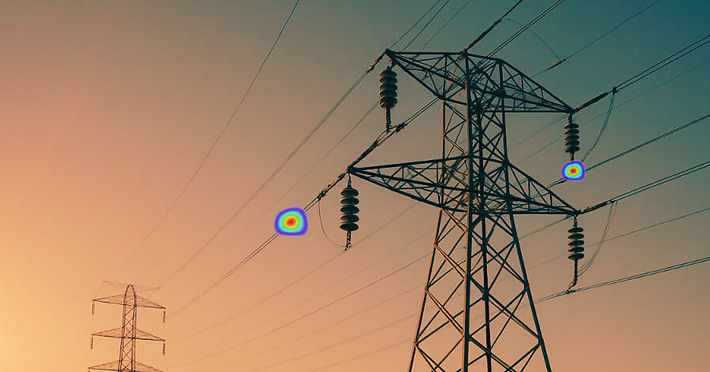
Our acoustic camera works by using an array of microphones, a technique called beamforming, to detect these ultrasonic signatures and then overlay them as a visual heat map onto a live feed. What was once invisible becomes, quite literally, a bright spot on your screen. A valve whispering its slow leak. An insulator quietly announcing its own degradation weeks or months before any other sensor would catch it. The effect, the first time you see it demonstrated, is genuinely striking. A piece of equipment that looks completely normal, reads clean on thermal, and passes a visual check will suddenly light up on the acoustic overlay. That's not a false positive, that's a problem you just caught before it became an emergency. For operations managers who have ever had to explain an unplanned shutdown, or finance directors who've signed off on emergency repair costs that dwarfed what a routine replacement would have been, that moment of early detection has a very specific dollar value attached to it.
A Shift in How We Think About Inspection
What excites us most about this technology isn't any single application, it's what it represents philosophically for the inspection industry as a whole.
For most of the history of asset inspection, we have been fundamentally reactive. We look for evidence of problems that are already in progress. Thermal imaging was a step toward earlier detection, but it still requires a process to be generating heat before it becomes visible. Acoustic inspection moves the detection window earlier still, to the point where a fault is announcing itself through physics long before it's announcing itself through consequences.
We're not just flying drones with cameras anymore. We're deploying diagnostic platforms that can listen to infrastructure the way a doctor listens to a heartbeat, catching the arrhythmia before the patient feels any symptoms. The era of purely photographic drone inspection was valuable. What comes next is something more like understanding what we're flying over, not just photographing it.
The DW-10's acoustic inspection capabilities are designed for deployment across power generation, transmission infrastructure, oil and gas, and heavy manufacturing environments. For technical specifications or to discuss operational integration, feel free to reach out directly.
DW-10
